LaTeX templates and examples — Algorithm
Recent
Testing is both technically and economically an important part of high quality software production. It has been estimated that testing accounts for half of the expenses in software production. Much of the testing is done manually or using other labor-intensive methods. It is thus vital for the software industry to develop efficient, cost effective, and automatic means and tools for software testing. Researchers have proposed several methods over years to generate automatically solution which have different drawbacks. This study examines automatic software testing optimization by using genetic algorithm approaches. This study will cover two approaches: a) obtain the sequence of regression tests that cover the greatest amount of code and b) once it is achieved another genetic algorithm will eliminate tests cases that cover the same section of code on the basis of still get the maximum code coverage. The overall aim of this research is to reduce the number of test cases that need to be run with the greatest amount of code covered.
An algorithm is a scheme for solving a problem. Can be implemented with any sequence of values or objects that have an infinite logic that is, anything that can provide a logical sequence.
Easy PSET template with examples.
Maximization of muffler performance is important, but there is always space volume constraints. Shape optimization of multi-segments Muffler coupled with the GA searching technique. Outline: Problem Statement Derivation of Four Pole Matrices and an expression for STL Introduction to GA and it's Implementation A numerical case of noise elimination on pure tone Results and Discussion
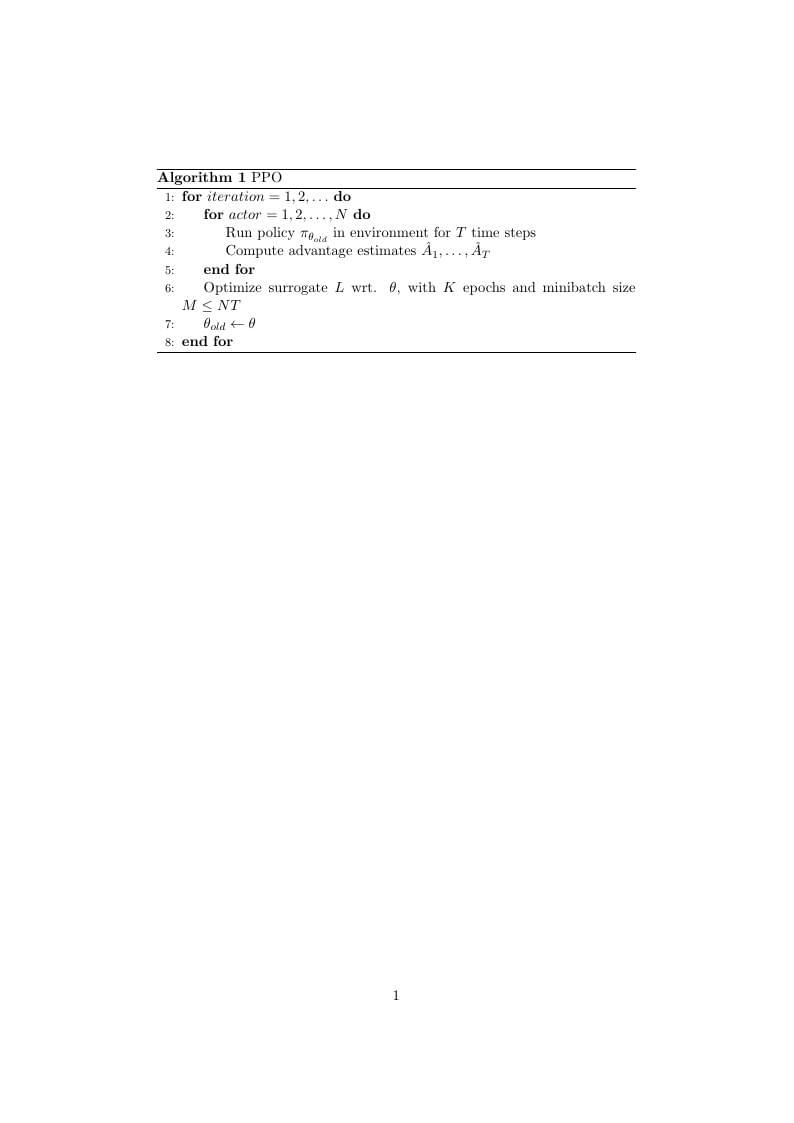
An example showing how to use pseudocode in Algorithmcx.
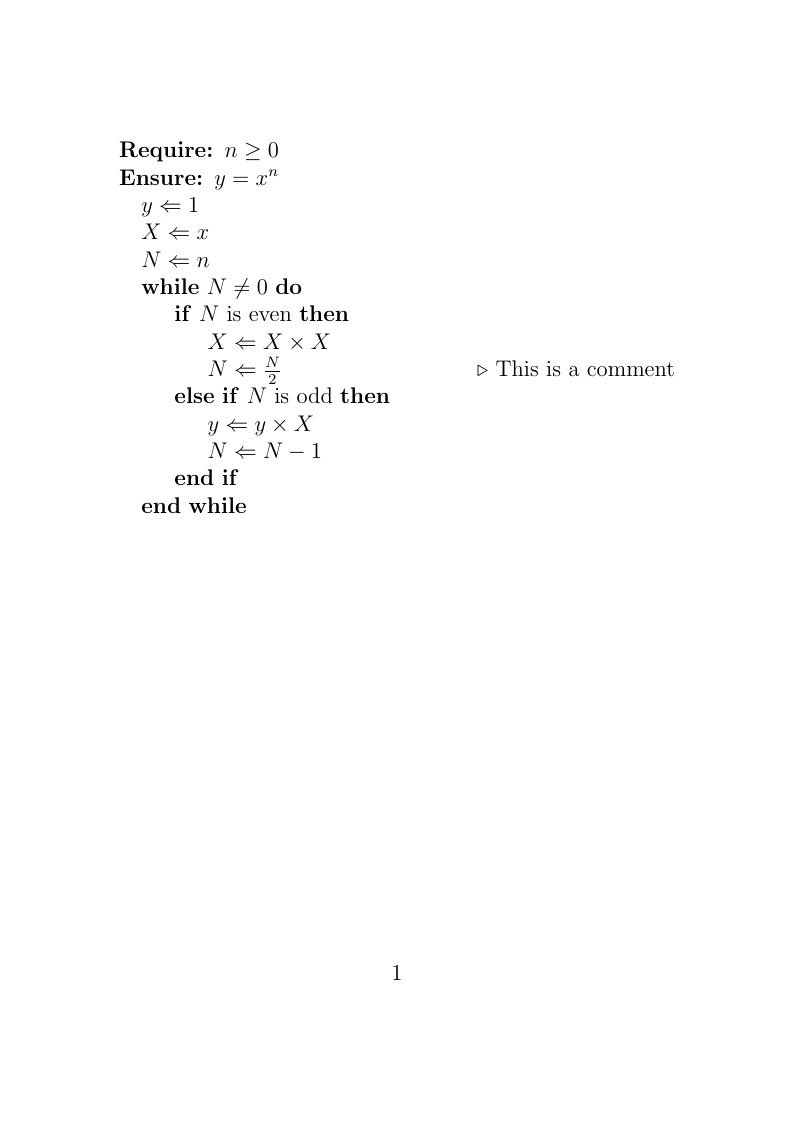
An example using the predefined algpseudocode command set from the algorithmicx package, for typesetting pseudocode or algorithms.
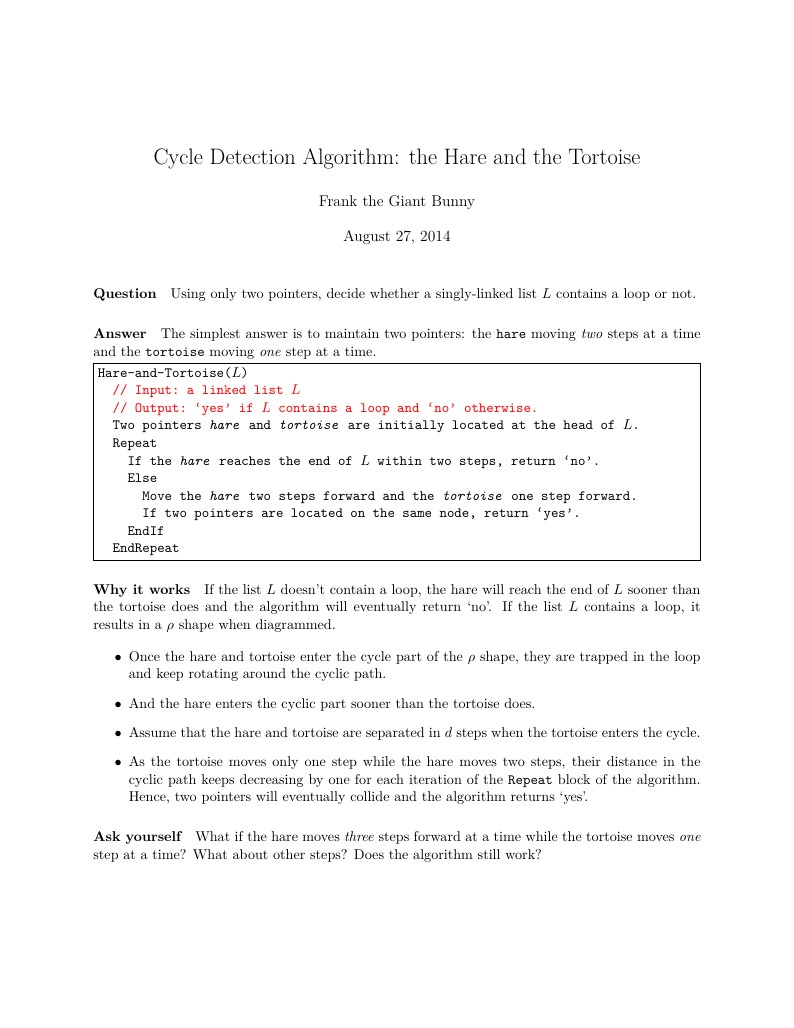
Explain how the Floyd's cycle detection algorithm works.
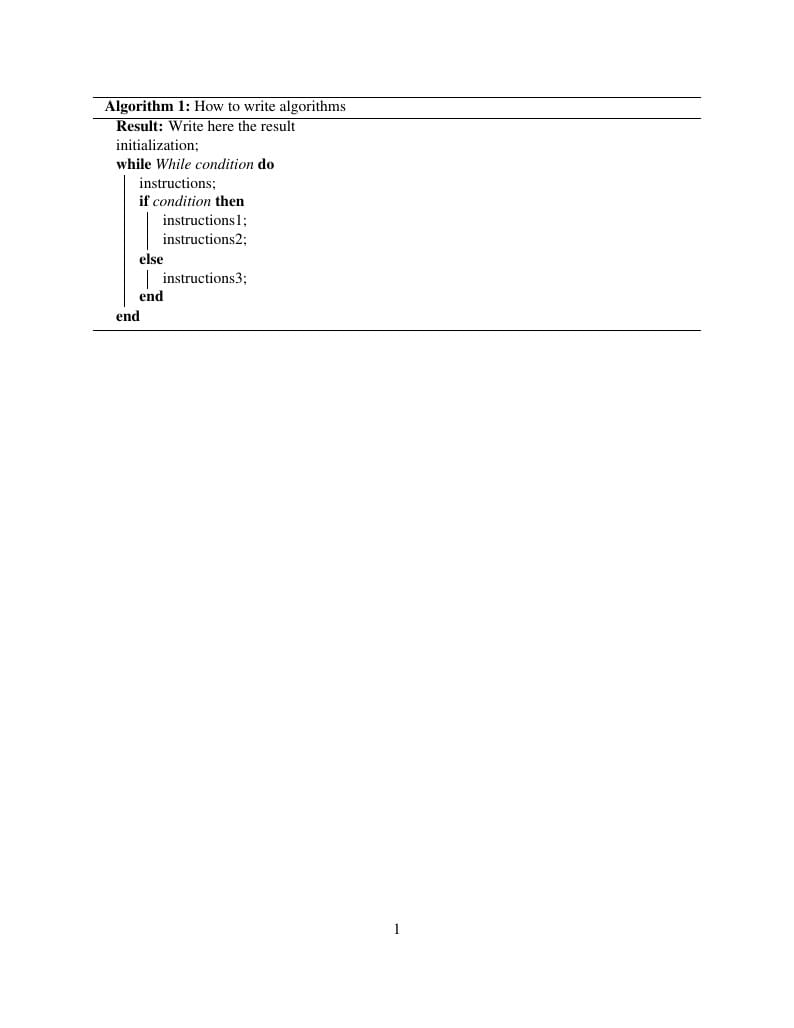
Converting pseudocode into algo format
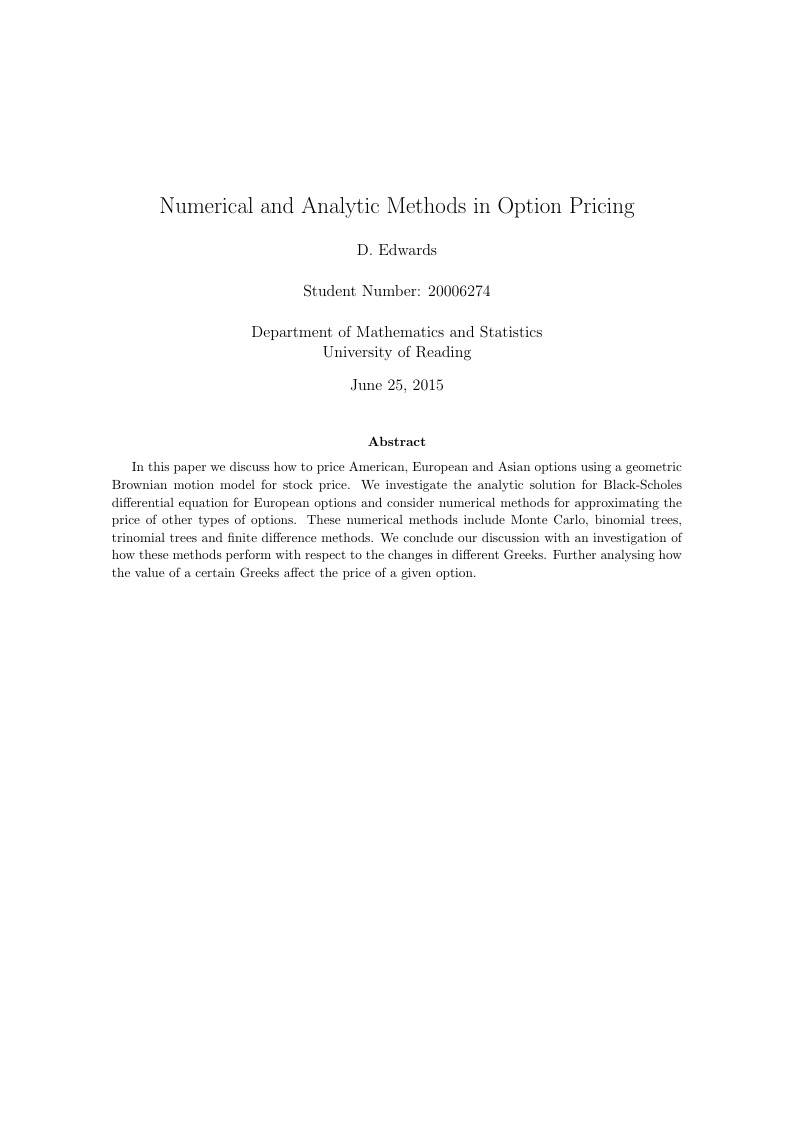
In this paper we discuss how to price American, European and Asian options using a geometric Brownian motion model for stock price. We investigate the analytic solution for Black-Scholes differential equation for European options and consider numerical methods for approximating the price of other types of options. These numerical methods include Monte Carlo, binomial trees, trinomial trees and finite difference methods. We conclude our discussion with an investigation of how these methods perform with respect to the changes in different Greeks. Further analysing how the value of a certain Greeks affect the price of a given option.
\begin
Discover why over 30 million people worldwide trust Overleaf with their work.